
Inside the SSCF Molecular Tumor Board

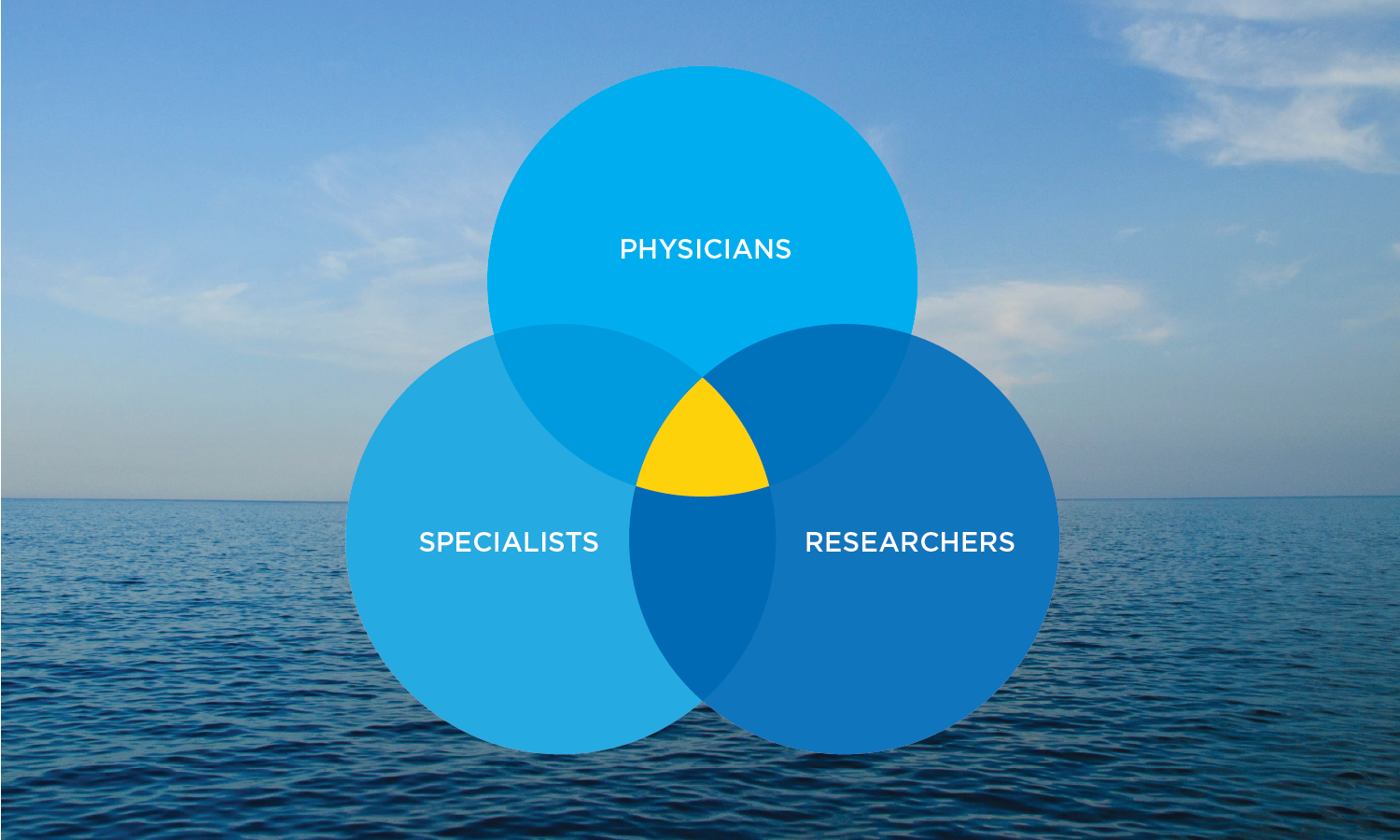
At South Sound CARE Foundation, collaboration has always been at the heart of our mission to bring cancer research and clinical trials closer to home. Under the leadership of Dr. Frank Senecal, that spirit of teamwork is taking new form through the SSCF Molecular Tumor Board—a multidisciplinary discussion that connects physicians, molecular biologists, and cancer care specialists across healthcare systems in our region.
The goal? To help clinicians interpret complex molecular test results, explore evolving treatment options, and ultimately create more personalized care plans for patients across the South Sound.
We spoke with Dr. Senecal about the role of molecular testing in modern cancer care—and how the new tumor board is helping community physicians navigate an increasingly complex landscape of cancer biology and targeted therapies.
What exactly is molecular testing, and how does it help in treating cancer?
“We think cancer is a function of alterations in genes—mutations that occur in specific genes that subsequently direct the behavior of the cancer, whether that be growth, spreading to different organs, or invasiveness.
There are many genetic changes that occur in a cancer. Some are critical to how the cancer functions, while others accumulate over time and make it more complex, especially in advanced stages.
The goal of molecular testing is to understand which changes matter most—so that we can target them. Sometimes, if we identify these mutations early, patients can live many years longer, and in some cases, even be cured.”
If a test shows a mutation, what does that mean for a patient’s treatment options?
“Mutations affect how DNA makes RNA, and how RNA directs proteins—the workhorses of our cells. When these processes go awry, it can lead to uncontrolled growth or loss of regulation.
Some mutations remove the ‘brakes’ that normally suppress cancer growth, which makes them hard to target. Others act like a stuck accelerator pedal, driving growth—and those are the ones we can sometimes block successfully with targeted therapies.”
What about when results show a less common mutation?
“That’s not unusual. We’re still learning a tremendous amount about molecular biology in cancer. Some genetic changes are well understood and clearly significant; others, we’re still studying to determine their impact.
Each result contributes to our broader understanding of cancer—and that knowledge helps guide both current treatment and future research.”
How does a tumor board bring together different experts, and how does that benefit community physicians and their patients?
“Doctors are busy caring for patients—they can’t be experts in every molecular change a cancer might present. That’s where collaboration comes in.
Molecular biologists and genetic specialists can interpret the data and help physicians understand which mutations are meaningful and which might be targeted.
The tumor board provides a space where clinicians can discuss real cases, share insight, and find the best possible care paths for patients.”
What is your experience with the new tumor board?
“It’s being embraced by oncologists and researchers here in the South Sound. Our next step is to include more community physicians from different institutions so we can learn from one another and make this a true regional resource.
The future is promising—and I believe this collaboration will be a tremendous help to our doctors and, most importantly, to our patients.”
What’s the biggest takeaway you’d want the public to know about tumor boards and molecular testing?
“They provide another opportunity to understand cancer and its biology—and with that, another opportunity for more effective, targeted treatment.
Ultimately, that means hope. Hope for better therapies, longer lives, and, sometimes, remission. That’s what we’re striving for.”
Together, We’re Advancing Cancer Care
The SSCF Molecular Tumor Board embodies this belief—showing what’s possible when collaboration drives innovation in cancer treatment. By connecting physicians, researchers, and specialists across healthcare systems, this initiative is helping turn molecular discoveries into real-world treatments and renewed hope for patients and families right here in the South Sound.